It’s easy to forget about drainage and erosion as winter sets in and you’re spending more time indoors and much of the water and moisture outside is frozen. But winter freeze and thaw cycles actually make standing water and runoff problems worse. Left unchecked, what was minor last season could be far worse come spring.
The good news is, mid- to late fall is not too late to address the issues you’ve noticed all season (or longer). Here, we’ll look at some DIY solutions for winter erosion prevention that you can accomplish now.
How Winter Weather Makes Drainage and Erosion Problems Multiply
We associate winter with snow and ice, but the reality is that temperatures fluctuate from day to day (or within a single day), resulting in freeze and thaw cycles that contribute to runoff and drainage problems. To make matters worse, the colder temperatures and limited sunlight in winter mean less natural evaporation is occurring, so there’s often more water to deal with than in warmer temperatures.
When the ground freezes, solid soil can’t absorb much moisture. The ground is also compacted under the weight of snow and ice. As a result, the soil can’t take in much moisture from melting snow or rain on warmer days. Instead, the water either pools or flows away, often taking loose soil, leaves, and other debris along.
Leaves, twigs, and even accumulated snow and ice can also block gutters, downspouts, storm drains, or natural flow paths, which diverts melting snow and rain into low-lying areas and causes puddles that can’t drain while the ground is still frozen.
Look for Signs of Poor Drainage
Fortunately, it’s usually easy to spot signs of poor drainage in your yard, but if they are still minor or you aren’t sure what to look for, that’s ok! These are telltale indicators of potential problems:
- Standing water after rain.
- Soft, muddy patches, even if grass is present.
- Streaks or patches of soil that have washed onto walkways.
- Exposed roots where soil has washed away.
- Water pooling near the foundation of the house, garage, or other structure.
If you’re diligent about looking for these signs, you can probably manage to fix them yourself with one or more of the solutions below. If they persist despite your best efforts, you’ll know the issue is more significant and it’s time to call in an expert.
DIY Solution #1: Fill Low Spots
If you spend any time walking around your yard you probably already know where the low spots are because they’re a little soggy, they’re easy to catch your foot on, or they’re easily visible.
Mark low spots with a flag, spray paint, or other object to see scope of the project. Placing a flat piece of lumber or furring strip across the spots makes it easier to visualize the size and depth of the spots.
Clear away dead grass, thatch, leaves, rocks, etc.
For shallow spots (i.e., 1 in. deep or less), fill in with a mixture of topsoil and sand, then rake it smooth and tamp lightly. A brief, gentle watering can help the material settle.
Fill deeper spots with topsoil, and if spots are several inches deep, it may be best to carefully cut out the top layer of sod, fill the indentation, and replace the sod.
While spring or mid-fall are the best time for this project, it’s ok to fill low spots in winter before the ground freezes. Minick’s Rich Mix is the perfect choice for filling and leveling because it’s more dense than garden ready soil and contains compost to give spring grass and plants a boost.
DIY Solution #2: Install a French Drain
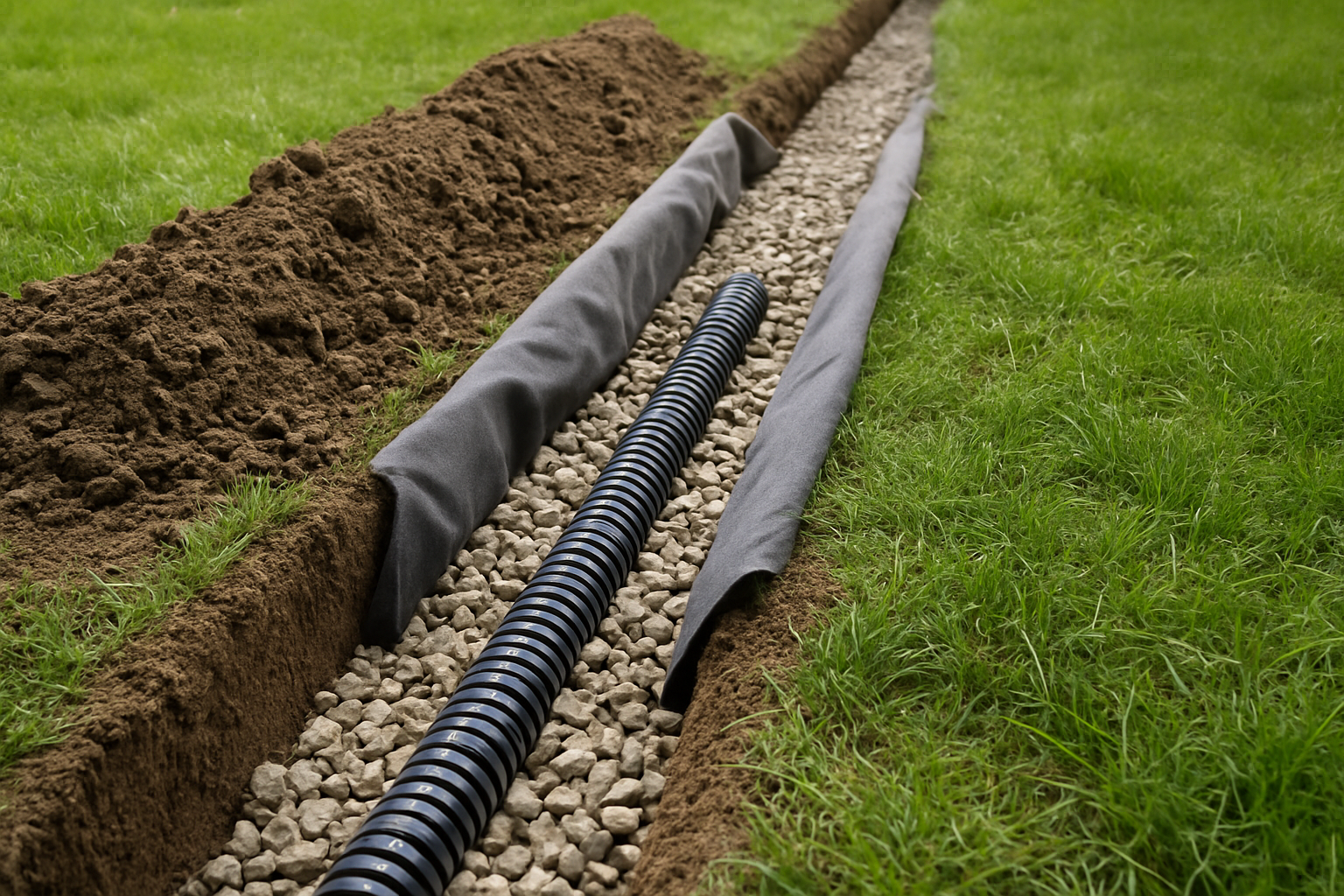
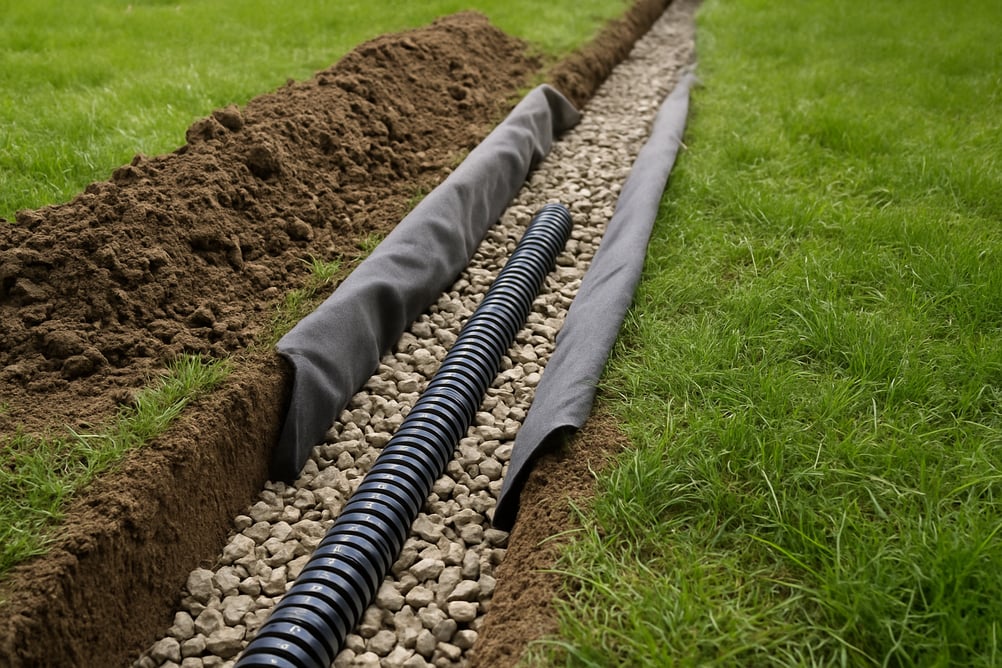
Named for its inventor, Henry Flagg French, a French drain is simply a trench with a perforated pipe embedded in gravel or crushed limestone. The pipe collects water as it absorbs into the soil and is then directed to a storm drain, the street, a stream, or other strategic location. A layer of special geotextile fabric is also placed over the pipe, blocking soil but allowing water to flow through to the pipe.
French drains are used to prevent flooding in low spots and on slopes, to protect foundations from water damage and seepage indoors, and to manage soggy yards by providing a path for water to flow to a suitable discharge point
Basic French drain installation is simple and straightforward:
- Observe where water accumulates and plan the best final destination and route for the water.
- Dig a trench from where the water pools to where you want it to flow.
- For surface water management, an 18-24 in. depth should suffice, though for foundations you may need to dig 2-3 ft. deep.
- Add a layer of crushed stone or gravel several inches deep.
- Lay the perforated pipe parallel to the trench.
- Place the separator fabric around the pipe to block soil from entering the pipe.
- Cover the pipe and fabric with more stone.
- Backfill with soil or a layer of crushed stone, level with the ground.
DIY Solution #3: Create a Rock Channel for Runoff
Channels made from gravel or decorative rock from Minick are an effective and eye-catching way to redirect water away from foundations, between structures, downspouts, or low areas around planting beds.
Start by digging a shallow trench from the point where the water collects, and create a path for it to follow to the road, a storm drain, a water feature, or other suitable place with good absorption. Line the trench with crushed stone and larger rocks, maintaining a shallow trough shape so the water doesn’t pool in any one area.
DIY Solution #4: Improve Your Soil’s Structure with Compost Before Winter
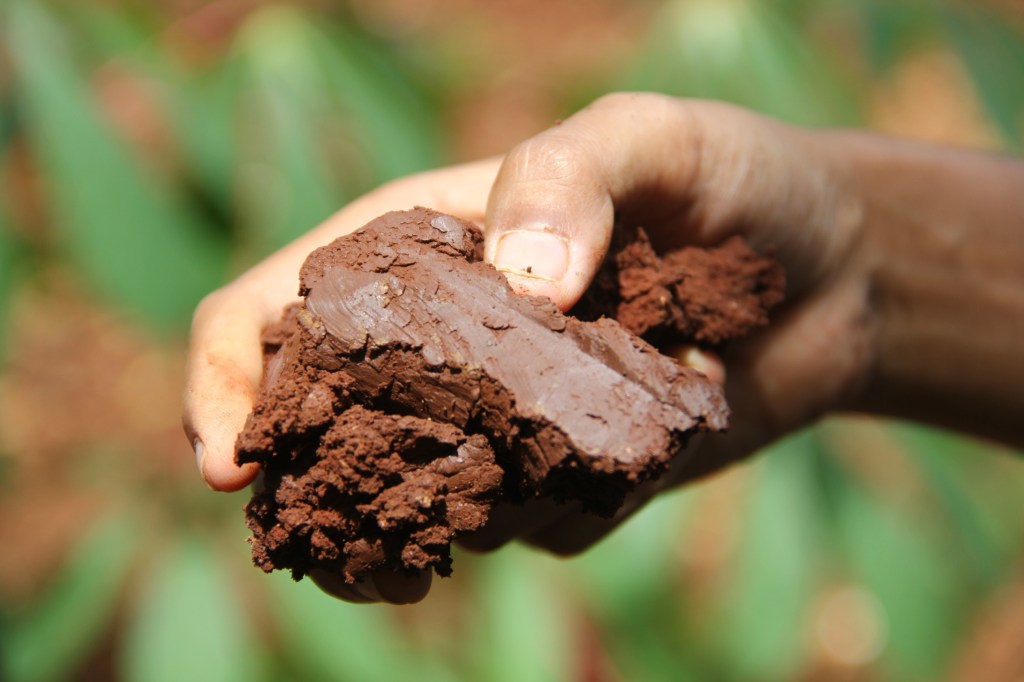
Healthy soil that contains a high volume of organic material is great at absorbing water and preventing erosion. That’s because it has a variety of shapes and sizes of porous material that soak up water and resist compaction. Unfortunately, many yards and planting beds become depleted over time as organic matter breaks down completely or excessive water washes away the soil itself.
Adding compost to your garden and planting beds in late fall refreshes the soil by replacing decomposed organic matter, and the process of mixing it into beds helps to aerate and break up compacted and clumpy spots. As a result, the soil is more stable and can take in more water, and it can more easily dissipate moisture into the surrounding areas instead of retaining it in place.
For a fully DIY project, making your own compost is always an option, especially if you have kitchen scraps and yard waste or leaves and the space for a composter. For many of us, however, purchasing compost is more realistic. Minick’s Dark Forest compost is pre-consumer food waste-based, and has a coarse grind that helps to keep soil loose. This high-quality compost is also Organic Materials Review Institute (OMRI) listed, which means it is free from prohibited substances, passes pathogen testing, and meets guidelines for temperature and microbial activity.
DIY Solution #5: Plant Ground Cover to Stabilize Your Soil
As they grow and branch out underground, plant roots form a physical network that holds soil in place, making it less likely to wash away. Over time, plants may be removed but not replaced, or become drowned out by excessive moisture. The smaller and less developed this root network is, the more soil becomes vulnerable to erosion from heavy rains, melting snow, and runoff.
Keeping beds and borders planted is a simple way to develop a robust root system that protects your soil. Over time, groundcover forms a dense mat with extensive roots that keep soil in place. They also add visual interest and a variety of foliage shapes and colors for a lower-maintenance option than grass, and many produce flowers as well. Some hardy, perennial options that do well in Oklahoma include:
- Creeping phlox.
- Ajuga.
- Vinca minor.
- Creeping thyme.
- Liriope.
- Creeping juniper
From refreshing existing beds to installing new ones, Minick’s garden ready soil, mulch, and rock options make it easy to add groundcover and other plantings that fight erosion beautifully.
Know When It’s Time to Call In the Pros
While there are many ways to solve minor yard drainage problems yourself, if what you’ve tried isn’t working as well as you’d hoped, or if it’s making things worse, it’s time to call in a professional who can identify and address the root cause. Likewise, there are times when it’s best to avoid the DIY approach entirely, such as:
- Steep slopes or regrading.
- Excessive, ongoing runoff.
- Digging that poses structural risks to buildings.
- Extensive retaining wall systems.
- Deep excavation needs.
- Projects that cover a majority of the yard or foundation.
Minick: Trusted by Homeowners and Professionals Alike
Poor drainage and erosion can be perennial problems, but they don’t have to. Choosing to address them before winter is the best way to protect your yard and building foundations from bigger problems later on, and to set your lawn up for success in spring.
At Minick we bring years of experience with drainage and erosion control, landscaping, hardscaping, retaining walls, and more to each of our customers. We supply bulk materials for outdoor projects ranging from your backyard gardens to golf courses to city parks and beyond.
No matter what type of project you’re starting, the Minick team can provide expert recommendations and bulk delivery of the materials you need including:
- Topsoil
- Compost
- Crushed limestone
- Decorative rock
- Gravel
Contact Minick to discuss backyard drainage ideas or your next DIY project!